
The Wychwoods Local History Society
  • Home
  • Search Results
  • Aspects of Milton: 1900s-1930s
  • Chairman’s Report May 2020
  • Photo Albums
  • WW1 War Memorabilia
  • Photo search results
  • Declaration of War
  • WLHS Editorial: Book Reviews
  • WLHS Editorial
  • WLHS Guest Articles
  • Featured photos
  • Arrival of Evacuees
  • Milton & Shipton Churches
  • Photo Albums
  • Shipton Miscellany
  • WLHS Journal Extracts
  • Digital Archive: Journal No 6
  • WLHS Publications
  • WLHS Personal Memories
  • Aims and Organisation
    • The Wychwoods Local History Society 1981-2002
  • Audio Recordings: The Rise and Fall of a Cotswold Woollen Mill
  • St. Michael’s Shipton Early 1900s
  • WLHS Previous Society Talks and Events
  • Talks and Events Reviewed
  • School Time
  • Digital Archive: Journal No 7
  • “Wychwoods History” – The Journals
  • Cospatrick in The Wychwood Magazine
  • Archives
  • Early 20th Century School Life
  • Preparing for War at Home
  • Multi Tagged photos
  • Photographic Archive
  • Early Prebendal Scenes
  • Articles and Updates
  • Contact Us
  • Shipton Court in 1895-1910
  • Shipton Court Early 1930s
  • Audio Recordings: Dorothy Thomson – More Memories
  • Soldiers and Airmen
  • Milton Scenes Early 1900s
  • For the Common Cause: Women at Home in Wartime
  • Reginald Tiddy
  • Digital Archive: Journal No 8
  • Road and Rail
  • Joan Howard-Drake and her Contribution to Local History in the Wychwoods
  • Milton Social Activities
  • The Wychwoods Local History Society – The First 40 Years 1981-2021
  • Audio Recordings: Wartime Memories with George and Megan Bradley
  • Who Were the Ascott Martyrs?
  • Matthews Mill, Shipton
  • Dr Scott and the Canteen
  • Digital Archive: Journal No 9
  • Farming Activities and People
  • The Ascott Martyrs: Levia Dring
  • Alfred Groves: A Historic Family Business
  • Domestic Life
  • Audio Recordings: Wartime Memories of Les Case and Edith Faulkner
  • Farming Images
  • James Baggs and his Little Black Book
  • Audio Recordings: Mabel Pearce Shipton Court Memories
  • Ascott Early 1900s
  • The Ascott Martyrs: Jane Moss and Fanny Honeybone
  • Vintage Transport and Deliveries
  • We Were Lucky Out Here: Food Rationing
  • Kelcot House
  • Leafield 1900s-1930s
  • No 7 Platoon Shipton under Wychwood Home Guard 1944
  • The Ascott Martyrs: Amelia and Charlotte Moss
  • Chairman’s Report May 2021
  • Audio Recordings: Jack Busby – Memories
  • Work for Women Outside the Home
  • Digital Archive: Journal No 10
  • The Manor Courts of Ascott D’Oilly
  • The Ascott Martyrs: Ann Moss
  • Fifield Residents Early 1900s
  • WLHS Members Survey
  • Audio Recordings: Dorothy Thomson with Edith Faulkner and Others
  • The Ascott Martyrs: Ann Susan Moss
  • Agriculture and Manufacturing
  • Audio Recordings: Early Bruern to 1536
  • Previous Trips and Excursions
  • Digital Archive: Journal No 11
  • The Ascott Martyrs: Caroline Moss
  • Idbury Early 1900s
  • The Shaven Crown, Shipton
  • Lyneham Miscellany
  • Trips and Excursions
  • The Ascott Martyrs: Martha Moss
  • Some Local Wychwoods Characters
  • The Wychwoods Local History Society Constitution
  • WW2 Wychwoods Home Front
  • The Effects of War
  • Digital Archive: Journal No 12
  • The Ascott Martyrs: Mary Moss
  • Cookie & Privacy Policy
  • How to Buy Society Publications
  • Record our History: “Marking Time”
  • Audio Recordings: Eva Bye Memories
  • The Costpatrick Story
    • Emigration-Related Articles from our Journals
    • External Cospatrick Web Links
  • The Ascott Martyrs: Mary Moss (Smith) 
  • Wychwoods Group Activities
  • WW2 Evacuees
  • Audio Recordings: Life of the Farm Worker 1780-1940
  • The Ascott Martyrs: Elizabeth Pratley
  • Digital Archive: Journal No 13
  • WW2 Victory Celebrations
  • Audio Recordings: St Mary’s Church and The Serpent
  • The Ascott Martyrs: Ellen Pratley
  • Digital Archive: Journal No 1
  • 2012 Members Survey
  • Audio Recordings: Emigration To New Zealand 
  • Article Listing by Category
  • Digital Archive: Journal No 14
  • The Ascott Martyrs: Mary Pratley
  • Digital Archive: Journal No 15
  • Recognise these?
  • The Ascott Martyrs: Martha Smith
  • The Wychwoods Album
  • Audio Recordings: The Groves Family – Talks by Norman Frost
  • The Ascott Martyrs: Rebecca Smith
  • Shipton Panorama, 1893
  • Digital Archive: Journal No 16
  • The Ascott Martyrs: Four Other Names
  • Society Activities Revisited
  • Useful External Resources for Research or General Interest
  • Digital Archive: Journal No 17
  • Audio Recordings: Cyril Lane talking to Rachel Grant
  • Digital Archive: Journal No 18
  • The Ascott Martyrs: The Story
  • Royal Visits and Jubilee Celebrations
  • Recent Research
  • Digital Archive: Journal No 2
  • Digital Archive: Journal No 19
  • Shipton Post Office, 1908/10
  • Search
  • Slides and Commentary: Milton and Shipton
  • The Ascott Martyrs: Discover More
  • Joining the Society
  • Contact Us
  • Shipton Views in the Early 1900s
  • Digital Archive: Journal No 20
  • Articles and Updates
  • Audio Recordings
    • Audio Recordings: Agricultural Trade Unions & Ascott Martyrs
  • Digital Archive: Journal No 21
  • Audio Recordings: World War Two Memories of Mrs Win Miles
  • The Ascott Martyrs Commemorative Textile
  • Chairman’s Report May 2022
  • Digital Archive: Journal No 22
  • Audio Recordings: Life Memories of Rose Burson
  • Festivities
  • The Cross Papers
  • Digital Archive: Journal No 23
  • The Ascott Martyrs
  • Digital Archive: Journal No 24
  • Photo Test
  • Tagged photos
  • Audio Recordings: Dorothy Thomson with Mary McNeill
  • Digital Archive: Journal No 25
  • News and Posts
  • The Wychwoods Local History Annual Programmes 1981-2021
  • Digital Archive: Journal No 26
  • Digital Archive: Journal No 27
  • The Wychwoods Local History Society Talks Programme 2026 / 2027
  • Audio Recordings: Mrs Newman, a Fulbrook Glover
  • Digital Archive: Journal No 3
  • Photo of the day
  • Digital Archive: Journal No 28
  • Alan Vickers
  • Digital Archive: Journal No 29
  • Audio Recordings: Mabel Pearce
  • The Ascott Martyrs 2
  • Digital Archive: Journal No 4
  • Digital Archive: Journal No 30
  • Digital Archive: Journal No 5
  • Guest Contribution: Milton Green
  • Digital Archive: Journal No 31
  • Milton-under-Wychwood High Street: Introduction
  • Archive Summary
  • The Second Wychwoods Album
  • Milton-under-Wychwood High Street: Before the 19th Century
  • Milton-under-Wychwood High Street: The 19th Century
  • “That’s How it Was”: Women in the Wychwoods during World War Two
  • Milton-under-Wychwood High Street: Shops and Pubs
  • Women in the Wychwoods during World War Two: Introduction
  • Milton-under-Wychwood High Street: Religion
  • WW1 Wychwoods Military
  • Video Recordings
  • Evening Talks Programme 2025/6
  • Milton-under-Wychwood High Street: 20th and 21st Centuries
  • Wychwood Women : The Interviewees
  • Other Publications
  • Click to open the search input field Click to open the search input field Search
  • Menu Menu

Archive for category: Editorial (Page 7)

You are here: Home1 / Editorial

Editorial, webmaster and committee submissions

Combe Mill Recollections

20th December 2019/in Editorial, Personal Memories/by Alan Vickers

The following article by Alan Vickers is based on the written notes of Jeff Broxholme, who has lived at Milton under Wychwood since 1969.
Combe Mill

An idyllic Life – Living by an old Oxfordshire Mill before and during the Second World War

His family lived very simply but Jeff Broxholme still remembers his early life at Combe Mill with affection. Combe Mill is in a valley midway between Long Hanborough and Combe Village in West Oxfordshire. The Oxford Worcester railway shares this valley with the River Evenlode. Combe Mill is mentioned in the Doomsday Book but was probably not as large as it is today. It is assumed that this earlier mill was a flour mill, powered by a water wheel on the River Evenlode. It has greatly changed since that time. Even the original village has disappeared, possibly because of the Black Death. It is said to have been relocated to the top of the hill where the present village stands, about one mile North of Combe Mill. There are no remains of the original village except for a mound where the church stood. This is on the left near the top of the drive from the road linking Long Hanborough with Combe.

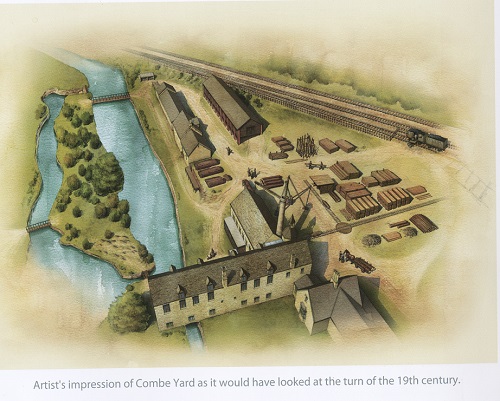
The drive itself leads to the Blenheim Estate Maintenance Yard. It passes two cottages where Jeff Broxholme lived until he was eighteen years old. Part of the first building on the left was a saw mill, in use until around 1980.

His father, Stephen Leonard Broxholme (always known as Leonard) was born in Ragby Lincolnshire in 1901. He worked as a sawyer in the local sawmill until 1927 and then moved to Heythrop to work in the sawmill there. In 1930 he married the housekeeper and cook of the Rectory at Cornwell, Emily Selina Hands from Chipping Norton and needed a house for his new family. He found a position as manager of the sawmill on an old estate yard belonging to the Duke of Marlborough in Combe and moved there in 1931. Jeff was born in the same year and his sister Edith Marina followed in 1934. Jeff’s father was the only sawyer at the mill which was very run down following the First World War and the depression of the 1920s. He was to work there from 1931-1949 cutting timber from the Estate Woods for use on the Estate – planks, posts, rails and oak coffin boards for Blenheim Palace.

Early Life

Jeff’s early life was somewhat precarious. At first the family lived in a small thatched cottage in the hamlet of East End Combe. When he was only two, a beam above the cottage fireplace caught fire which spread to the thatch. He still recalls the flames and reflections off the firemens’ helmets. He was taken to another house in the hamlet. His mother was rehoused with a friend nearby. Shortly afterwards the family moved to Combe Mill. There he suffered a series of illnesses, possibly due to the poor water quality at the Mill. At first he developed a large swelling in the neck and had this operated on at the Radcliffe, travelling there from the new railway halt at Combe. While recuperating he took some water to drink from a bucket at Mrs Williams’, friends of his parents who had helped them following the fire. He slipped and fell on the edge of the bucket undoing all his stitches. Somebody with a car took him back to the Radcliffe. Later he spent time in the isolation ward at Abingdon with scarlet fever.

Life at Combe Mill

Food was never in short supply. Leonard always had a fried breakfast before going to work. Eggs came from their own chickens. A very impressive cockerel attacked young Jeff but disappeared very shortly afterwards, presumably via the pot. Rabbits and hares could be caught but game birds belonging to the Estate were strictly off the menu (hardly surprising when a gamekeeper was summarily dismissed after a day’s shoot just failed to reach a bag of one thousand birds!).

Occasionally there were shooting parties from the Estate in the vicinity of the Mill and Jeff’s home would be used for luncheon if required. The servants brought the food in hay boxes. The ladies used the house for powdering their noses – how they got on with the Elsan earth toilet in the garden is not known!

 There were domestic rabbits too whose numbers were increased by taking the does to the buck in Long Hanborough. Two pigs were kept in sties at the back of the house. One was killed in March and one in November by the local slaughter man. A straw fire would be lit to burn off the bristles and the carcase hung up to bleed. Milk was delivered from Richard Colliers’s farm along the lane. Although the river was close by, fresh fish did not figure on the menu although occasionally eels were caught and eaten and their skins used for shoe laces. In season, blackberries and hazelnuts could be gathered from the hedgerows close to the mill.

Bread and meat were delivered. The meat came from a butcher in Woodstock. Bread was supplied by the two bakers in Combe.  One, Mr Pott, did not have a van and walked everywhere with a large basket. He also delivered telegrams and cooked meat for private households on Sundays. The Coop could be reached by bicycle to Long Hanborough. Some groceries came in Walford’s van from Bladon and there was a small grocers in Combe, Teddy Busby Stores. The Combe Post Office also served as a general store. Brookes stores, also in Combe, supplied sweets. Clothes were ordered at Strong and Morris in Woodstock but sometimes items were obtained from Banbury.

Mrs Broxholme made a wheat and potato wine. Other sources of alcoholic beverages were the three public houses which existed at that time in Combe village – the Cock (still in existence today), the Royal Oak and the Marlborough Arms. The Royal Oak suffered a setback when the landlord, Mr Muggeridge, killed himself by jumping off a railway bridge into the river following irregularities with the Christmas fund.

Heating the home was not a problem as the family could burn the offcuts from the sawmill. The same energy supply served for cooking. Electric power only came to the cottage in the 1950s. Light was from paraffin lamps or candles.

Entertainment was from a battery powered radio bought just before the War and attached to a long wire aerial. New batteries were sourced from Woodstock when required. There were no holidays but only the occasional bus trip to the coast, mostly to Southsea which was the closest point on the coast. A train trip to Chipping Norton to visit his maternal grandparents was an infrequent pleasure. This would be either in a diesel car or on a steam train where the driver would sometimes allow you to stand on the footplate. At Kingham one had to change and go over the covered bridge to catch the train to Chippy.

School Life

Jeff started his formal education at five years old in the infant department of Combe School. He would be taken the one and half miles on the back of a bicycle ridden by his mother. Because of the earlier injury to his neck, he was always reminded to take extra care and could not take part in sports or games so that he felt isolated from his schoolmates. There was no hot food at school. Most children went home at midday. Some, like Jeff, who lived some distance from the village, were allowed to stay in the school and eat their sandwiches. A large white card was hung on the school gate and the children could not re-enter the school until this was removed. Jeff would be picked up again by his mother at the end of school. In the meantime, his father kept an eye on Edith, sometimes with the help of a neighbour, until his mother got back.

The School comprised two classes and served around 35 pupils. Mrs Woodward looked after the infants (aged 5 to 7). Jeff was one of the smallest children and was put next to another small boy, Derek Allan, at the front of the class. Next door, the Head teacher, Miss Walker, had four different classes in one room – 7 to 8 year olds, 8 to 9 year olds, 9 to 10 year olds and 10 to 11 year olds.

The ultimate disciplinary sanction was the cane across the hand. Jeff remembers the cane breaking on the hand of a boy called David Oliver.

At the age of eleven, those, who had passed the Scholarship, went to Chipping Norton Grammar School. They cycled to Stonesfield (on bicycles apparently provided by the Council) where they caught a bus. Jeff went instead to the Marlborough Secondary Modern School at Woodstock. Prior to this school being opened in 1939, village children who did not pass the 11+ went by bus to the bigger school in Church Handborough.

The keepers saw to it that there were no raptors in the neighbourhood but Jeff remembers other wild life – otter spraints on the concrete strip near the mill, water voles and lots of hedgehogs. Strangely he does not recall seeing wild ducks but one year there was a wild goose down by the river although this disappeared just four days before Christmas!

The Village Calendar

An important village event was the celebration of Mayday. All the school pupils were taught various dances. The older girls had to decorate an old bath chair with flowers to form a suitable carriage for the May Queen, chosen, along with a May King, by the Head teacher, Miss Walker. This carriage was pulled around the village and a collection made for some unspecified purpose. The girls wore flower patterned dresses with bonnets. The boys had hoods extending over their shoulders in green cotton and long green buttoned coats reaching nearly down to their knees. Costumes were made by Miss Walker’s mother who lived with her in the school house. After the dancing on the green, there was a tea party and sports.

The first Sunday after 10th August was the Combe Feast. There was a funfair often with steam engines, on both village greens.

There were other flower and vegetable shows, which were usually held in conjunction with a fete and sports. These took place either at “Combe House” or at Mrs Cottrel Dormer’s in the middle of the village. Jeff’s father won many prizes for his vegetables and Jeff and his sister usually won certificates for wild flower displays.

At the end of the school year, there was always a school play where Miss Walker attempted to involve every child.

The Second World War

At Sunday school one day, Jeff learned that “there was a war on”. When he got home, his father confirmed this. Jeff asked who he was going to join, “the cowboys or the indians”!

With the outbreak of war the pupils were told to stick brown tape to the larger windows of the School. They were issued with a gasmask at home. This was a trunk like contraption with an eyepiece to look out from. The lower part comprised a flat metal attachment which was adjusted by the man who had brought it. The whole thing smelt strongly of rubber. Later everybody had to go to The Royal Oak Public House and line up by a large table to have another bit fitted to their gas mask. The lower part was green and it was fitted by means of some special sticky tape. Apparently this new bit contained charcoal. Gasmasks were kept in a brown cardboard box with a string handle so that they could be carried over the shoulder. This later wore out so a tin tube with a lid and string handle had to be bought to replace it. There were frequent practices at school in putting on the gas mask. Sometimes the eye piece misted up and the Head teacher told the children to rub some soap on the inside of the mask. Great fun could be had by blowing effective raspberries from inside the mask. There was no explanation as to what the brown paper or the gas masks were for. Similarly the children did not know why they were asked to bring cans to school and then hammer them flat.

 Many evacuees came to Combe and the surrounding area. They brought their own school teachers. One day two ladies appeared at the Mill with five children from Enfield in tow. The Broxholme family were required to house them – the French family of three (two girls, Betty and Ruth and one boy Derrick) and one boy (Peter) and one girl (Beryl) from a family called Carr. Peter and Derrick took the bus each day from Combe to Marlborough School with Jeff. This unexpected supply of playmates was welcome to Jeff and he does not recall any special friction between the children. They delighted in playing in the surrounding woods and there were Leonard’s wonderful sledges to play on in the winter.

Canadian soldiers were billeted at Blenheim Park where cattle and some lambs were said to have ended up on barbecues. The Americans were based at Brize Norton and Heythrop and consequently black troops were a rare sight in Combe. There were few British camps close to Combe apart from one at Finstock (the concrete remains are still visible close to the Garden Centre.) Freeland housed a military hospital.. There was a satellite airfield at Kingswood where Spitfires were hidden in the woods.

In the direction of Charlbury, there was a grass strip and a tin hangar housing a Liberator for the personal use of Winston Churchill who was a frequent visitor to Ditchley House.

Actual military activity  was hardly in evidence – a few incendiary bombs falling on Stonesfield and Bladon and a Bren Gun Carrier which became stuck in the river close to the Mill. The four Coldstream guardsmen from the Bren Carrier spend six weeks living in the Mill yard stables. Jeff and the evacuees helped clean the river mud off the bullets. His mother did all their cooking and even interceded for them when their officer would not let them go to a local dance!

The closest form of military power was the Home Guard. Jeff’s father was a member of the Combe unit. Some of the exercises closely resembled an episode of Dad’s Army. For example, on one occasion, the Combe unit managed to penetrate the defences of Brize Norton by using a false floor in a lorry. On another famous day during an exercise which pitted the Combe Home Guard against the forces of Long Hanborough, the Combe unit prevailed when the whole village population turned out and helped arrest the Long Hanborough contingent!

One night Leonard took Jeff out to Combe Hill rise to show him the glow coming from the bombing attack on Coventry.

Leonard Broxholme served in the Home Guard until he had a serious accident. Walking in the blackout to Combe for a Home Guard meeting, the handle of his canvas shoulder bag was caught by a passing car and he was dragged along. He lost an eye and one arm was so damaged that he did not regain the use of it until 1963 when a pit bonesetter in the North of England worked a miracle that was apparently beyond conventional medical practioners in the twenty years since the accident occurred.

Just before D-Day, there were manoeuvres between British and American troops around Combe. Telephone wires were laid in the fields from the back of trucks. Afterwards the wire was carefully harvested by the children just as they had done throughout the War with the aluminium strip broadcast to confuse the enemy radar. This wire made much stronger reed boats than had been possible before the War.

The children did not receive regular pocket money but earned cash by collecting flattened tins and rose hips for the war effort. Rose hips at three pence a pound were particularly worthwhile.

All the children were issued with Wellington boots during the war. Prior to that, wet socks had been hung up around the Tortoise stove in the classroom.

In 1943 Jeff joined the Scouts and stayed with them until he was 19, eventually becoming a Kings Scout. It rained on his first camp but the scoutmaster lit a fire and prepared a hot drink and supper. Sacks of straw were obtained from a farmer and these became the boys’ beds on the groundsheets. The scout movement became a window to the world beyond rural Oxfordshire when he went to France and Norway with the scouts in the late 1940s.

Members of the Red Spinning Society, a fishing club for London businessmen, would sometimes come down for a weekend of fishing. They would be looked after by Mrs Broxholme. Jeff recalls some splendid characters among the visiting members. A Mr Panyey had been to America and could spin a rope like a cowboy. Another used to bring a microscope and entertain the children with the results from his pond dipping among the reeds. Some were wonderful conversationalists who could conjure up something of life beyond rural Oxfordshire.

Later Career

Leonard moved to the Eynsham Estate in 1948 and worked in the saw mill there until the Mason family lost much of their fortune through the collapse of copper prices. Leonard then worked in Woodstock for Scarsbrook before finally joining the timber department of Groves the builders in Milton under Wychwood in 1954. Jeff became an apprentice carpenter at Tolley Brothers of Bladon in 1945. After two years of National Service with the RAF, He came back to Chipping Norton to work with a former colleague who was setting up as a jobbing builder. In 1954 he too joined Groves in Milton, working as a bricklayer charge hand.

The Mill in Detail

Cut timber was stacked on the right hand side of the drive to dry. Planks were left for seasoning underneath the carpentry shops. Some oak boarding was kept at Blenheim for coffins (including probably Winston Churchill’s) The planks and rails had small laths of about 1 1/4” by ½” placed under each piece of timber. It was reckoned that each ¼” of timber needed a year to season.

The timber in the form of tree trunks was brought by contractors, often using Foden steam lorries, and was placed where a small wooden crane (a derrick) could lift them onto a steel plate to be moved to a large circular saw blade. This crane was operated by hand with a winding handle and pulled diagonally as required by a second operator. If the log was too long, it had to be cut by a crosscut saw, a two handled saw blade operated by two people. Jeff remembers seeing his mother use the blade when no other person was available.

The mill was powered by a water wheel driven by shafts and pulleys through a blacksmith’s shop connecting with the main machinery under the saw mill. The water wheel, which is still in place today, was quite large, approximately 13 feet diameter by 8 feet across. It was converted in 1850 to saw mill use (source Oxfordshire Mills by Wilfred Foreman published by Phillimore 1983). The wheel was “breast-fed” ie the water hit the wheel midway between the top and the bottom of the wheel. The resulting power was well used. The first use was for a water pump taking water to the roof of the building where it filled a large tank supplying the adjoining cottages. This was only river water and was not for drinking. There were taps over the kitchen sink and also a copper in the wash house. (Drinking water came from a spring on the other side of the river, about 150 yards away. Two buckets had to be fetched before breakfast.)

The next use of the power from the water wheel was to turn the fans in the blacksmith’s shop. This was followed by power to the band saw in what was called the “pattern shop” on the first floor. The cogs for the pit wheel and pinion wheel were made from cast iron coupled with wooden cogs made from hornbeam.

The fourth use of the power was to the sandstone wheel used by foresters to sharpen their axes.

The fifth use was to a large lathe, used mainly to cut the hubs of cart wheels some of which could reach 15”” in diameter.

The sixth power offtake was to the saw mill itself. This was in the form of a continuous belt to a rack of belt pulleys powering respectively:

  1. A small carburundum wheel for sharpening saws
  2. A planing tool with a blade of approximately 15” wide, installed around 1944
  3. A large saw between 3 to 4 feet diameter
  4. A steel plate (called a rack bench) for bringing tree trunks from outside to the saw for ripping. The derrick crane previously mentioned lowered trunks onto this plate.
  5. A belt from the steam beam engine (discussed below)
  6. A small saw of approximately 30 inches diameter for a hand push bench  for much smaller pieces of timber

The steam engine was installed in about 1852 It was used when river water levels were too low following drought or when there was too much water because of flooding. This double acting, condensing, rotating beam engine was only therefore used intermittently between 1852 and 1913 and was in good condition when laid up in 1913. It was left in a locked room until the early 1940s. An auxiliary steam engine was installed during the First World War to cope with the additional throughput of timber needed for pit props and trench supports for the War Office. This was a coal fired agricultural tractor with belt drive. Jeff remembers this engine falling apart during the 1930s and it was probably scrapped around 1936.

The water wheel was in poor condition and required a new shaft when Jeff’s father arrived. He arranged for this to be produced at his previous sawmill in Heythrop. The mill workings were generally in bad condition – pully shafts were often missing and wheels had to be replaced. Brass castings were obtained from Daniels in Bridge Street Witney. Heavy mechanical work, including work on the waterwheel, was carried out by Johnson and Son of Standlake. Once the new main shaft for the waterwheel had been installed more people were engaged at the Combe Mill. An assistant, Mr Margates was taken on to help Leonard. Tom Knibbs was the carpenter working in the shop. He was the son of the landlord at the Cock Inn in Combe. A blacksmith, Bert Horn, came in from Bladon when required. A painter lived next door to Jeff’s family. The foreman for the estate yard was Charlie Townsend.

The company was completed by a horse named Jolly who could be harnessed to a cart for deliveries. A full time stableman from Long Hanborough looked after the horse and made the deliveries. The water wheel was used until the 1950s when electric power was installed at the Mill.

The chimney for the beam engine had been knocked down around 1922. As it was only of brick construction it was easily dismantled. Most of the bricks were simply dropped down inside the chimney.

The later Restoration of the Mill

Jeff was first approached by a group interested in restoring the mill chimney in 1968-69. He completely stripped down the old chimney and built a new one which has a date plate for 1972 fixed on the West side. The new chimney was first used in 1973 when the restored beam engine was fired up for the first time and Leonard, much to his delight, was able to witness this not long before his death in 1977. The restoration group was surprised to see how fast the engine fly wheel ran.

The original boiler is still in place but would no longer withstand the required steam pressure. A subsidiary boiler was installed and is used at the present time. The original boiler is of the Cornish type, consisting of a horizontal cylinder or drum and was installed at the same time as the engine. It is thought to be one of the oldest boilers in the country still capable of use.

The mill race was blocked up by the Estate but a small reservoir of water has been installed by the restorers. Water is pumped from the river to provide some motion to the wheel. The original sluice gate was also unfortunately destroyed by estate workers in the period 1965-1975. The water run from this sluice gate had produced an enormous hole in the river bed with a pool of 40’ diameter and 8’ deep, ideal for boating with reed boats, swimming and diving.

The mill building has now been restored thanks to a Lottery grant and is protected as a Grade II listed building. The restoration included the provision of a lift for the disabled. The Mill is now open for visitors  and is in steam from March to October on the third Sunday in the month. Here is The official Combe Mill Website

0 0 Alan Vickers Alan Vickers2019-12-20 11:09:312021-08-13 11:28:09Combe Mill Recollections

Ascott-under-Wychwood – a Short History

19th December 2019/in Editorial, Guest Articles/by David Betterton

A summary of the history of Ascott-under-Wychwood is available here, compiled by Elaine Byles with contributions by Wendy Pearse, Jim Pearse and Sue Richards. and published on the Parish Council website in 2016.

0 0 David Betterton David Betterton2019-12-19 17:08:092021-08-13 11:27:05Ascott-under-Wychwood – a Short History

Articles and Updates

14th October 2019/in Editorial/by avatar

This area of our website contains articles, comments and news from members and visitors.

We welcome articles, stories of local interest, recollections, comments or any other feedback. Please contact us with any submissions, which can be in Word or PDF format, or simple email.

“Marking Time” to record our history: See more here.

2026
  • August 8th | When Hollywood Came to the Wychwoods (Research)
  • July 16th | Wychwood Weddings: Our Latest Library Exhibition (Library Exhibitions)
  • May 13th | Our May 2026 Evening Event: AGM and ‘From Our Archive’ (Editorial)
  • May 9th | Dancing Days in the Wychwoods: Our Latest Library Exhibition (Library Exhibitions)
  • May 4th | James Longshaw of Shipton, Musician (Journal Extracts)
  • April 25th | Visit to Milton-under-Wychwood by a Groves family descendant – 22nd April 2026 (Editorial, Member Contributions)
  • April 15th | Family History Research: An Interesting Find (Editorial)
  • April 9th | Our April 2026 Evening Talk: Who Do You Think They Were? (Talks and Events)
  • March 30th | Library Displays: Updated List (Editorial)
  • March 29th | Cubs in Action 1981 – Can you Name Them? (Editorial)
  • March 19th | From Australia to Ascott: A Photographic Homecoming (Research)
  • March 11th | Our March 2026 Evening Talk: A Profile of Thomas Fairfax (Talks and Events)
  • March 6th | Wychwoods Women: Our Latest Library Exhibition (Library Exhibitions)
  • February 11th | Our February 2026 Evening Talk: A History of Witney New Mill (Talks and Events)
  • January 17th | Pubs in the Wychwoods: Our Latest Library Exhibition (Library Exhibitions)
  • January 15th | Our January 2026 Evening Talk: The Mitford Sisters with Gillian Cane (Talks and Events)
2025
  • December 11th | Our December 2025 Evening Talk: Christmas in the Cotswolds with Sean Callery (Talks and Events)
  • December 1st | Langston House Care Home: A Retrospective (Research)
  • October 20th | A Dog’s Life in the Wychwoods: Our Latest Library Exhibition (Library Exhibitions)
  • October 13th | Our November 2025 Evening Talk: Fairford Church with Juliet Heslewood (Talks and Events)
  • October 8th | Our October 2025 Evening Talk: A History of What the English Have Eaten (Talks and Events)
  • September 21st | The Houses at Upper End, Shipton: A History (Houses, Research)
  • September 10th | Our September 2025 Evening Talk: Trench Humour in the First World War (Talks and Events)
  • August 13th | Sculptural Curiosities in Milton-under-Wychwood: Library Exhibition (Library Exhibitions)
  • August 1st | Forest Gate – The Story of a Milton House (Houses, Research)
  • July 23rd | Leafield Radio Station: A Century of Innovation and Communication (Research)
  • July 13th | WLHS at Milton Fete (Editorial)
  • June 12th | The Oxford Waits: at Milton Village Hall on June 11th 2025 (Editorial, Talks and Events)
  • June 11th | Men at Work: Our latest Library Exhibition (Library Exhibitions)
  • May 21st | Images of Fifield – New Photo Archive Addition (Editorial)
  • May 14th | Our May 2025 Evening Event: AGM and ‘From Our Archive’ (Talks and Events)
  • April 16th | The Best Days of Our Lives: Our latest Library Exhibition (Library Exhibitions)
  • April 9th | Our April 2025 Evening Talk: The Chipping Norton Branch Line (Talks and Events)
  • March 13th | Our March 2025 Evening Talk: Archaeological Developments in the Chipping Norton Area (Talks and Events)
  • February 15th | Football in the Wychwoods – Our Latest Library Exhibition (Library Exhibitions)
  • February 12th | Our February 2025 Evening Talk: Child Labour in 19th Century Oxfordshire (Talks and Events)
  • February 1st | An Audio Clip: Duncan Waugh’s Vicar’s Tale (Editorial)
  • January 9th | Our January 2025 Evening Talk: Costwold Quarries – Part Two (Talks and Events)
  • January 5th | An Audio Clip: Duncan Waugh’s Jail Cell Anecdote (Editorial)
2024
  • December 20th | Our December 2024 Evening Talk: A Victorian Christmas (Editorial, Talks and Events)
  • November 30th | Jim Pearse – Farmer and Entertainer (Editorial, Personal Memories)
  • November 19th | Letter from New Zealand to the People of the Wychwoods (Editorial)
  • November 13th | Our November 2024 Evening Talk: The Cospatrick 150th Anniversary Reflections (Talks and Events)
  • November 2nd | Cospatrick 150th Anniversary Commemorations (Research, Talks and Events)
  • October 9th | Our October 2024 Evening Talk: Our Boys 1914 – 1918 (Talks and Events)
  • September 12th | Wychwoods Harvest-home and Farming Life: Our Latest Library Exhibition (Library Exhibitions)
  • September 11th | Our September 2024 Evening Talk: The Portable Antiquities Scheme (Talks and Events)
  • August 27th | The Society at Shipton Fete 2024 (Editorial)
  • July 26th | Fetes and Festivities: Our Summer Library Photo Display (Library Exhibitions)
  • July 25th | Dr Kate Tiller OBE (Editorial)
  • July 16th | The Society and the Fete at Milton (Editorial, Talks and Events)
  • July 2nd | Visit to North Leigh Roman Villa (Visits and Excursions)
  • June 23rd | Family History Day at Ascott under Wychwood (Editorial)
  • June 8th | Emigration to New Zealand: From Journal No 28 (Journal Extracts)
  • June 6th | Howzat! A History of Cricket in the Wychwoods (Library Exhibitions, Research)
  • June 4th | New Ascott under Wychwood Village Trail (Editorial)
  • May 15th | From Journal No 22: A History of Bruern Abbey (Journal Extracts)
  • May 15th | From Journal No 6: Bruern Abbey Fishpond (Journal Extracts)
  • May 10th | From Coldstone to Honeydale: Jim Pearse Remembers (Personal Memories)
  • May 10th | Our May 2024 Evening Event: AGM and “From Our Archive” (Editorial, Talks and Events)
  • May 8th | From Journal No 17: Some Wychwood Neighbourhoods about 1900 (Journal Extracts)
  • May 1st | A Selection of Audio File Extracts (Editorial)
  • April 29th | Janet Wallace (née Scott) 1934-2024 (Editorial)
  • April 20th | Schooldays and Childhood in the Wychwoods: A Review (Library Exhibitions, Research)
  • April 11th | Our April 2024 Evening Talk: “Down in the Dumps” – How Oxford Helped Win World War Two (Talks and Events)
  • March 27th | WLHS Photo Displays in Milton under Wychwood Library (Library Exhibitions)
  • March 22nd | Dorothy Thomson and the Tale of Mr Samuda’s Model T Ford (Editorial, Personal Memories)
  • March 16th | Our March 2024 Evening Talk: Known Unto God – A Great War Detective Story (Talks and Events)
  • March 9th | Corrugated Iron in the Wychwoods: A Review (Library Exhibitions, Research)
  • March 1st | Datchet Gate Lodge, Windsor – Some Snapshot Research (Research)
  • February 15th | Our February 2024 Evening Talk: The Effect of Enclosures on Common Right (Talks and Events)
  • January 20th | A Winter’s Tale in the Wychwoods: Our Latest Milton Library Exhibition (Library Exhibitions)
  • January 11th | Our January 2024 Evening Talk: Cemeteries of Oxford : more than a Century of History (Talks and Events)
2023
  • December 6th | Pantomime Shows in the Wychwoods: Memories (Guest Articles)
  • November 9th | Our November 2023 Evening Talk: Romans of Oxfordshire (Talks and Events)
  • October 12th | Our October 2023 Evening Talk: Drovers’ Roads in Oxfordshire and Beyond (Talks and Events)
  • September 14th | The Rector Returns: A Follow-Up (Editorial, Personal Memories)
  • September 14th | Our September 2023 Evening Talk: ‘Morris’ Motopolis (Talks and Events)
  • August 31st | WLHS at Tall Trees Care Home (Editorial)
  • August 27th | Margaret Ann Ware 28th June 1933 – 4th July 2023 (Editorial)
  • June 17th | Ascott Martyrs Trust Family History Day (Editorial, Talks and Events)
  • June 12th | Neighbourhood Bells: An Appreciation (Editorial, Research)
  • May 29th | Uncover Oxfordshire’s past with Heritage Search (Editorial)
  • May 19th | Visit to the Oxfordshire Museums Resource Centre: May 2023 (Talks and Events, Visits and Excursions)
  • May 11th | Our May 2023 Evening Talk: History of the Windrush Stone Quarries (Talks and Events)
  • April 29th | Cissie Carpenter and the Good Doctor (Editorial, Personal Memories)
  • April 29th | Bim Champness and Some Memories of Village Characters (Editorial, Personal Memories)
  • April 29th | Dorothy Thomson, Hathaways and Mrs Wiggins (Editorial, Personal Memories)
  • April 29th | Dulcie Arundell and the Tale of the American Soldier at Shipton Station (Editorial, Personal Memories)
  • April 29th | George Bradley and his London Wartime Deliveries (Editorial, Personal Memories)
  • April 29th | Megan Bradley and the Canadian Soldiers in World War II (Editorial, Personal Memories)
  • April 13th | Our April 2023 Evening Talk: English Civil War in the Cotswolds (Talks and Events)
  • March 9th | Our March 2023 Evening Talk: Bellfounding at Burford 1630-1940 (Talks and Events)
  • March 1st | Their Finest Hour Project – WWII Memorabilia Digital Collections Day (Editorial, Personal Memories)
  • February 9th | Our February 2023 Evening Talk: Conscientious Objection, Religion, and the Public in Oxford in 1916 (Talks and Events)
  • January 21st | The Parish Room Mystery: Can You Help? (Editorial)
  • January 12th | Our January 2023 Evening Talk: RAF Brize Norton – 80 Years of Flying Operations (Talks and Events)
2022
  • December 8th | The Society’s Archive and Study Centre (Editorial)
  • November 12th | English Almshouses (Ancient and Modern) : Our November 2022 Evening Talk (Talks and Events)
  • November 9th | The Hartley Family: Sporting Siblings and Brothers in Arms (Editorial)
  • October 13th | On This Day in Oxfordshire: Our October 2022 Evening Talk (Book Reviews, Talks and Events)
  • September 15th | The Medway Queen: Our September 2022 Evening Talk (Talks and Events)
  • August 28th | Membership Applications and Renewals (Talks and Events)
  • July 14th | Charlbury Then and Now – New Publication (Book Reviews)
  • April 16th | Lewis Carroll and the River Thames: Our April 2022 Evening Talk (Book Reviews, Talks and Events)
  • March 10th | The History of FWP Matthews Mill: Our March 2022 Evening Talk (Talks and Events)
  • February 19th | A Magic Lantern Splutters Back into Life (Editorial)
  • February 15th | A Wychwoods Wedding: Reply to a recent inquiry from the WLHS website (Member Contributions, Personal Memories)
  • February 10th | Oxfordshire during the Second World War: Our February 2022 Evening Talk (Talks and Events)
  • January 13th | Roman Tackley: Our January 2022 Evening Talk (Talks and Events)
2021
  • December 24th | William Green, Clockmaker of Milton under Wychwood – From the Society Journal No 22 (Journal Extracts)
  • December 20th | Joan Howard-Drake and her contribution to local history in the Wychwoods (Editorial)
  • November 11th | William Morris and the Cotswolds: Our November 2021 Evening Talk (Talks and Events)
  • October 14th | The Development of Primitive Methodism: October 2021 Talk (Talks and Events)
  • October 11th | Book Review: Aston, Cote, Shifford and Chimney – A Parish History (Book Reviews)
  • October 1st | Milton’s Unusual Wooden Carving (Editorial)
  • September 29th | The 1870s: A Decade of Decisions – From the Society Journal No 3 (Journal Extracts)
  • September 13th | The Small Tin Church – Little Ben Rings Back (Editorial)
  • September 1st | The Rector Returns – A Well-Travelled Painting (Editorial)
  • August 13th | The Cospatrick Tragedy – From the Society Journal No. 14 (Journal Extracts)
  • August 13th | More Memories of Shipton -The Village Shops and Roundsmen | From the Society Journal No. 10 (Editorial, Journal Extracts, Personal Memories)
  • August 12th | Early Days at Shipton | From the Society Journal No.7 (Editorial, Journal Extracts, Personal Memories)
  • August 11th | Observations on Ridge and Furrow in Honeydale Field | From the Society Journal No. 7 (Editorial, Journal Extracts)
  • August 10th | What’s in a Name? | From the Society Journal No.15 (Journal Extracts)
  • July 27th | The 19th Century Letters of Thomas and Hannah Groves | From the Society Journal No. 2 (Journal Extracts)
  • July 15th | The Burford – Shipton Omnibus: A Note from the Past (Journal Extracts)
  • July 12th | Bones under the Pew (Journal Extracts)
  • July 3rd | A Wychwoods Farming Year 1854–55 | From the Archive (Journal Extracts)
  • June 20th | A Short History of Milton-under-Wychwood High Street (Houses, Research)
  • June 5th | Exhibition at Churchill Heritage Centre (Editorial)
  • May 22nd | Glove Making in West Oxfordshire: Our May 2021 Evening Talk (Talks and Events)
  • May 7th | Exhibition of Photography: Milton Library (Library Exhibitions)
  • May 1st | A Portrait of an Old Lyneham Gentleman (Guest Articles, Personal Memories)
  • April 30th | The Society’s 25th Anniversary Remembered (Editorial)
  • April 16th | A Hero of the Oxford and Bucks Light Infantry: April 2021 Evening Talk (Talks and Events)
  • April 10th | Annunciation Relief Sculptures, Shipton Church (Journal Extracts)
  • April 9th | Local Casualties of a Forgotten War in Iraq (Editorial, Journal Extracts)
  • March 19th | Recent Evening Talk: “The Journey From Afghanistan” (Editorial, Talks and Events)
  • March 6th | “Keeping a Watch” – Memories of Shipton One Hundred Years Ago (Personal Memories)
  • February 25th | A Wartime Wedding at Prebendal House (Editorial, Journal Extracts)
  • February 19th | The Wilts & Berks Canal – The Latest Society Talk (Editorial, Talks and Events)
  • February 9th | Maria Matthews: A Gifted Life in Context (Editorial)
  • February 2nd | A Curious Find in Shipton: 1985 (Editorial, Journal Extracts)
  • January 27th | Discovery in the Snow (Guest Articles)
  • January 23rd | Our Third Online Talk: Ellen Hinde and the Prebendal (Talks and Events)
  • January 18th | The Shipton Prebend: An Early History (Editorial, Journal Extracts)
  • January 18th | Prebendal House, Shipton: Archaeological Review (Editorial, Journal Extracts)
  • January 14th | Early 1960s Milton School Memories (Personal Memories)
  • January 10th | Australia Bound: From Ascott to the “Promised Land” (Editorial, Journal Extracts)
  • January 6th | Jessie Jones (1885-1945): Teacher with a Legacy (Editorial)
  • January 3rd | 19th Century Emigration from Oxfordshire: A Book Review (Book Reviews)
2020
  • November 20th | Our Second Online Meeting (Talks and Events)
  • November 11th | Ivan Wright & Family – Shipton Under Wychwood (Personal Memories)
  • October 20th | Using Technology: Our First Online Meeting (Talks and Events)
  • October 17th | Some Sculptural Curiosities in Milton-under-Wychwood (Research)
  • October 12th | Apprentice Boys: Charity Records Revisited (Journal Extracts)
  • September 4th | Wychwoods Victorian Evening 1990 (Editorial)
  • July 5th | Ascott Village Charity Booklet: Village History and Things to Know (Guest Articles)
  • June 22nd | Shipton Memories: Jim Hudson (Personal Memories)
  • June 22nd | Churchill Remembrances (Guest Articles)
  • May 9th | A Shipton Lad – Not just a Naughty Boy (Personal Memories)
  • April 10th | The Shipton Tillyards (Editorial, Personal Memories)
  • April 1st | Life in Old Milton (Houses, Journal Extracts, Personal Memories)
  • January 14th | Cotham Cottage, Milton (Houses, Journal Extracts)
2019
  • December 20th | Combe Mill Recollections (Editorial, Personal Memories)
  • December 19th | Ascott-under-Wychwood – a Short History (Editorial, Guest Articles)
  • October 14th | Articles and Updates (Editorial)

0 0 avatar avatar2019-10-14 15:02:202021-05-03 10:54:21Articles and Updates
Page 7 of 7«‹567

Pages

  • “That’s How it Was”: Women in the Wychwoods during World War Two
  • “Wychwoods History” – The Journals
  • 2012 Members Survey
  • About Us
  • Agriculture and Manufacturing
  • Aims and Organisation
  • Alan Vickers
  • Alfred Groves: A Historic Family Business
  • Archive Summary
  • Archives
  • Arrival of Evacuees
  • Article Listing by Category
  • Articles and Updates
  • Articles and Updates
  • Ascott Early 1900s
  • Aspects of Milton: 1900s-1930s
  • Audio Recordings
  • Audio Recordings: Cyril Lane talking to Rachel Grant
  • Audio Recordings: Dorothy Thomson – More Memories
  • Audio Recordings: Dorothy Thomson with Edith Faulkner and Others
  • Audio Recordings: Dorothy Thomson with Mary McNeill
  • Audio Recordings: Early Bruern to 1536
  • Audio Recordings: Emigration To New Zealand 
  • Audio Recordings: Eva Bye Memories
  • Audio Recordings: Jack Busby – Memories
  • Audio Recordings: Life Memories of Rose Burson
  • Audio Recordings: Life of the Farm Worker 1780-1940
  • Audio Recordings: Mabel Pearce
  • Audio Recordings: Mabel Pearce Shipton Court Memories
  • Audio Recordings: Mrs Newman, a Fulbrook Glover
  • Audio Recordings: St Mary’s Church and The Serpent
  • Audio Recordings: The Groves Family – Talks by Norman Frost
  • Audio Recordings: The Rise and Fall of a Cotswold Woollen Mill
  • Audio Recordings: Wartime Memories of Les Case and Edith Faulkner
  • Audio Recordings: Wartime Memories with George and Megan Bradley
  • Audio Recordings: World War Two Memories of Mrs Win Miles
  • Chairman’s Report May 2021
  • Chairman’s Report May 2020
  • Chairman’s Report May 2022
  • Contact Us
  • Contact Us
  • Cookie & Privacy Policy
  • Cospatrick in The Wychwood Magazine
  • Declaration of War
  • Digital Archive: Journal No 1
  • Digital Archive: Journal No 10
  • Digital Archive: Journal No 11
  • Digital Archive: Journal No 12
  • Digital Archive: Journal No 13
  • Digital Archive: Journal No 14
  • Digital Archive: Journal No 15
  • Digital Archive: Journal No 16
  • Digital Archive: Journal No 17
  • Digital Archive: Journal No 18
  • Digital Archive: Journal No 19
  • Digital Archive: Journal No 2
  • Digital Archive: Journal No 20
  • Digital Archive: Journal No 21
  • Digital Archive: Journal No 22
  • Digital Archive: Journal No 23
  • Digital Archive: Journal No 24
  • Digital Archive: Journal No 25
  • Digital Archive: Journal No 26
  • Digital Archive: Journal No 27
  • Digital Archive: Journal No 28
  • Digital Archive: Journal No 29
  • Digital Archive: Journal No 3
  • Digital Archive: Journal No 30
  • Digital Archive: Journal No 31
  • Digital Archive: Journal No 4
  • Digital Archive: Journal No 5
  • Digital Archive: Journal No 6
  • Digital Archive: Journal No 7
  • Digital Archive: Journal No 8
  • Digital Archive: Journal No 9
  • Domestic Life
  • Dr Scott and the Canteen
  • Early 20th Century School Life
  • Early Prebendal Scenes
  • Emigration-Related Articles from our Journals
  • Evening Talks Programme 2025/6
  • External Cospatrick Web Links
  • Farming Activities and People
  • Farming Images
  • Featured photos
  • Festivities
  • Fifield Residents Early 1900s
  • For the Common Cause: Women at Home in Wartime
  • Guest Contribution: Milton Green
  • How to Buy Society Publications
  • Idbury Early 1900s
  • James Baggs and his Little Black Book
  • Joan Howard-Drake and her Contribution to Local History in the Wychwoods
  • Joining the Society
  • Kelcot House
  • Leafield 1900s-1930s
  • Lyneham Miscellany
  • Matthews Mill, Shipton
  • Milton & Shipton Churches
  • Milton Scenes Early 1900s
  • Milton Social Activities
  • Milton-under-Wychwood High Street: 20th and 21st Centuries
  • Milton-under-Wychwood High Street: Before the 19th Century
  • Milton-under-Wychwood High Street: Introduction
  • Milton-under-Wychwood High Street: Religion
  • Milton-under-Wychwood High Street: Shops and Pubs
  • Milton-under-Wychwood High Street: The 19th Century
  • Multi Tagged photos
  • News and Posts
  • No 7 Platoon Shipton under Wychwood Home Guard 1944
  • Photo Albums
  • Photo Albums
  • Photo of the day
  • Photo search results
  • Photo Test
  • Photographic Archive
  • Preparing for War at Home
  • Previous Trips and Excursions
  • Recent Research
  • Recognise these?
  • Record our History: “Marking Time”
  • Reginald Tiddy
  • Road and Rail
  • Royal Visits and Jubilee Celebrations
  • School Time
  • Search
  • Search Results
  • Shipton Court Early 1930s
  • Shipton Court in 1895-1910
  • Shipton Miscellany
  • Shipton Panorama, 1893
  • Shipton Post Office, 1908/10
  • Shipton Views in the Early 1900s
  • Slides and Commentary: Milton and Shipton
  • Society Activities Revisited
  • Soldiers and Airmen
  • Some Local Wychwoods Characters
  • St. Michael’s Shipton Early 1900s
  • Tagged photos
  • Talks and Events Reviewed
  • The Ascott Martyrs
  • The Ascott Martyrs 2
  • The Ascott Martyrs Commemorative Textile
  • The Ascott Martyrs: Amelia and Charlotte Moss
  • The Ascott Martyrs: Ann Moss
  • The Ascott Martyrs: Ann Susan Moss
  • The Ascott Martyrs: Caroline Moss
  • The Ascott Martyrs: Discover More
  • The Ascott Martyrs: Elizabeth Pratley
  • The Ascott Martyrs: Ellen Pratley
  • The Ascott Martyrs: Four Other Names
  • The Ascott Martyrs: Jane Moss and Fanny Honeybone
  • The Ascott Martyrs: Levia Dring
  • The Ascott Martyrs: Martha Moss
  • The Ascott Martyrs: Martha Smith
  • The Ascott Martyrs: Mary Moss
  • The Ascott Martyrs: Mary Moss (Smith) 
  • The Ascott Martyrs: Mary Pratley
  • The Ascott Martyrs: Rebecca Smith
  • The Ascott Martyrs: The Story
  • The Costpatrick Story
  • The Cross Papers
  • The Effects of War
  • The Manor Courts of Ascott D’Oilly
  • The Second Wychwoods Album
  • The Shaven Crown, Shipton
  • The Wychwoods Album
  • The Wychwoods Local History Annual Programmes 1981-2021
  • The Wychwoods Local History Society – The First 40 Years 1981-2021
  • The Wychwoods Local History Society Constitution
  • The Wychwoods Local History Society Talks Programme 2026 / 2027
  • Trips and Excursions
  • Useful External Resources for Research or General Interest
  • Video Recordings
  • Vintage Transport and Deliveries
  • We Were Lucky Out Here: Food Rationing
  • Who Were the Ascott Martyrs?
  • WLHS Editorial
  • WLHS Editorial: Book Reviews
  • WLHS Guest Articles
  • WLHS Journal Extracts
  • WLHS Members Survey
  • WLHS Personal Memories
  • WLHS Previous Society Talks and Events
  • WLHS Publications
  • Women in the Wychwoods during World War Two: Introduction
  • Work for Women Outside the Home
  • WW1 War Memorabilia
  • WW1 Wychwoods Military
  • WW2 Evacuees
  • WW2 Victory Celebrations
  • WW2 Wychwoods Home Front
  • Wychwood Women : The Interviewees
  • Wychwoods Group Activities
  • Audio Recordings: Agricultural Trade Unions & Ascott Martyrs
  • The Wychwoods Local History Society 1981-2002
  • Other Publications

Categories

  • Book Reviews
  • Editorial
  • Guest Articles
  • Houses
  • Journal Extracts
  • Library Exhibitions
  • Member Contributions
  • Personal Memories
  • Research
  • Talks and Events
  • Visits and Excursions

Archive

  • August 2026
  • July 2026
  • May 2026
  • April 2026
  • March 2026
  • February 2026
  • January 2026
  • December 2025
  • October 2025
  • September 2025
  • August 2025
  • July 2025
  • June 2025
  • May 2025
  • April 2025
  • March 2025
  • February 2025
  • January 2025
  • December 2024
  • November 2024
  • October 2024
  • September 2024
  • August 2024
  • July 2024
  • June 2024
  • May 2024
  • April 2024
  • March 2024
  • February 2024
  • January 2024
  • December 2023
  • November 2023
  • October 2023
  • September 2023
  • August 2023
  • June 2023
  • May 2023
  • April 2023
  • March 2023
  • February 2023
  • January 2023
  • December 2022
  • November 2022
  • October 2022
  • September 2022
  • August 2022
  • July 2022
  • April 2022
  • March 2022
  • February 2022
  • January 2022
  • December 2021
  • November 2021
  • October 2021
  • September 2021
  • August 2021
  • July 2021
  • June 2021
  • May 2021
  • April 2021
  • March 2021
  • February 2021
  • January 2021
  • November 2020
  • October 2020
  • September 2020
  • July 2020
  • June 2020
  • May 2020
  • April 2020
  • January 2020
  • December 2019
  • October 2019

Home | Aims and Organisation | Events | Publications | Archives| Photographic Archive | Contact Us | Articles and Updates

Pages

  • “That’s How it Was”: Women in the Wychwoods during World War Two
  • “Wychwoods History” – The Journals
  • 2012 Members Survey
  • About Us
  • Agriculture and Manufacturing
  • Aims and Organisation
  • Alan Vickers
  • Alfred Groves: A Historic Family Business
  • Archive Summary
  • Archives
  • Arrival of Evacuees
  • Article Listing by Category
  • Articles and Updates
  • Articles and Updates
  • Ascott Early 1900s
  • Aspects of Milton: 1900s-1930s
  • Audio Recordings
  • Audio Recordings: Cyril Lane talking to Rachel Grant
  • Audio Recordings: Dorothy Thomson – More Memories
  • Audio Recordings: Dorothy Thomson with Edith Faulkner and Others
  • Audio Recordings: Dorothy Thomson with Mary McNeill
  • Audio Recordings: Early Bruern to 1536
  • Audio Recordings: Emigration To New Zealand 
  • Audio Recordings: Eva Bye Memories
  • Audio Recordings: Jack Busby – Memories
  • Audio Recordings: Life Memories of Rose Burson
  • Audio Recordings: Life of the Farm Worker 1780-1940
  • Audio Recordings: Mabel Pearce
  • Audio Recordings: Mabel Pearce Shipton Court Memories
  • Audio Recordings: Mrs Newman, a Fulbrook Glover
  • Audio Recordings: St Mary’s Church and The Serpent
  • Audio Recordings: The Groves Family – Talks by Norman Frost
  • Audio Recordings: The Rise and Fall of a Cotswold Woollen Mill
  • Audio Recordings: Wartime Memories of Les Case and Edith Faulkner
  • Audio Recordings: Wartime Memories with George and Megan Bradley
  • Audio Recordings: World War Two Memories of Mrs Win Miles
  • Chairman’s Report May 2021
  • Chairman’s Report May 2020
  • Chairman’s Report May 2022
  • Contact Us
  • Contact Us
  • Cookie & Privacy Policy
  • Cospatrick in The Wychwood Magazine
  • Declaration of War
  • Digital Archive: Journal No 1
  • Digital Archive: Journal No 10
  • Digital Archive: Journal No 11
  • Digital Archive: Journal No 12
  • Digital Archive: Journal No 13
  • Digital Archive: Journal No 14
  • Digital Archive: Journal No 15
  • Digital Archive: Journal No 16
  • Digital Archive: Journal No 17
  • Digital Archive: Journal No 18
  • Digital Archive: Journal No 19
  • Digital Archive: Journal No 2
  • Digital Archive: Journal No 20
  • Digital Archive: Journal No 21
  • Digital Archive: Journal No 22
  • Digital Archive: Journal No 23
  • Digital Archive: Journal No 24
  • Digital Archive: Journal No 25
  • Digital Archive: Journal No 26
  • Digital Archive: Journal No 27
  • Digital Archive: Journal No 28
  • Digital Archive: Journal No 29
  • Digital Archive: Journal No 3
  • Digital Archive: Journal No 30
  • Digital Archive: Journal No 31
  • Digital Archive: Journal No 4
  • Digital Archive: Journal No 5
  • Digital Archive: Journal No 6
  • Digital Archive: Journal No 7
  • Digital Archive: Journal No 8
  • Digital Archive: Journal No 9
  • Domestic Life
  • Dr Scott and the Canteen
  • Early 20th Century School Life
  • Early Prebendal Scenes
  • Emigration-Related Articles from our Journals
  • Evening Talks Programme 2025/6
  • External Cospatrick Web Links
  • Farming Activities and People
  • Farming Images
  • Featured photos
  • Festivities
  • Fifield Residents Early 1900s
  • For the Common Cause: Women at Home in Wartime
  • Guest Contribution: Milton Green
  • How to Buy Society Publications
  • Idbury Early 1900s
  • James Baggs and his Little Black Book
  • Joan Howard-Drake and her Contribution to Local History in the Wychwoods
  • Joining the Society
  • Kelcot House
  • Leafield 1900s-1930s
  • Lyneham Miscellany
  • Matthews Mill, Shipton
  • Milton & Shipton Churches
  • Milton Scenes Early 1900s
  • Milton Social Activities
  • Milton-under-Wychwood High Street: 20th and 21st Centuries
  • Milton-under-Wychwood High Street: Before the 19th Century
  • Milton-under-Wychwood High Street: Introduction
  • Milton-under-Wychwood High Street: Religion
  • Milton-under-Wychwood High Street: Shops and Pubs
  • Milton-under-Wychwood High Street: The 19th Century
  • Multi Tagged photos
  • News and Posts
  • No 7 Platoon Shipton under Wychwood Home Guard 1944
  • Photo Albums
  • Photo Albums
  • Photo of the day
  • Photo search results
  • Photo Test
  • Photographic Archive
  • Preparing for War at Home
  • Previous Trips and Excursions
  • Recent Research
  • Recognise these?
  • Record our History: “Marking Time”
  • Reginald Tiddy
  • Road and Rail
  • Royal Visits and Jubilee Celebrations
  • School Time
  • Search
  • Search Results
  • Shipton Court Early 1930s
  • Shipton Court in 1895-1910
  • Shipton Miscellany
  • Shipton Panorama, 1893
  • Shipton Post Office, 1908/10
  • Shipton Views in the Early 1900s
  • Slides and Commentary: Milton and Shipton
  • Society Activities Revisited
  • Soldiers and Airmen
  • Some Local Wychwoods Characters
  • St. Michael’s Shipton Early 1900s
  • Tagged photos
  • Talks and Events Reviewed
  • The Ascott Martyrs
  • The Ascott Martyrs 2
  • The Ascott Martyrs Commemorative Textile
  • The Ascott Martyrs: Amelia and Charlotte Moss
  • The Ascott Martyrs: Ann Moss
  • The Ascott Martyrs: Ann Susan Moss
  • The Ascott Martyrs: Caroline Moss
  • The Ascott Martyrs: Discover More
  • The Ascott Martyrs: Elizabeth Pratley
  • The Ascott Martyrs: Ellen Pratley
  • The Ascott Martyrs: Four Other Names
  • The Ascott Martyrs: Jane Moss and Fanny Honeybone
  • The Ascott Martyrs: Levia Dring
  • The Ascott Martyrs: Martha Moss
  • The Ascott Martyrs: Martha Smith
  • The Ascott Martyrs: Mary Moss
  • The Ascott Martyrs: Mary Moss (Smith) 
  • The Ascott Martyrs: Mary Pratley
  • The Ascott Martyrs: Rebecca Smith
  • The Ascott Martyrs: The Story
  • The Costpatrick Story
  • The Cross Papers
  • The Effects of War
  • The Manor Courts of Ascott D’Oilly
  • The Second Wychwoods Album
  • The Shaven Crown, Shipton
  • The Wychwoods Album
  • The Wychwoods Local History Annual Programmes 1981-2021
  • The Wychwoods Local History Society – The First 40 Years 1981-2021
  • The Wychwoods Local History Society Constitution
  • The Wychwoods Local History Society Talks Programme 2026 / 2027
  • Trips and Excursions
  • Useful External Resources for Research or General Interest
  • Video Recordings
  • Vintage Transport and Deliveries
  • We Were Lucky Out Here: Food Rationing
  • Who Were the Ascott Martyrs?
  • WLHS Editorial
  • WLHS Editorial: Book Reviews
  • WLHS Guest Articles
  • WLHS Journal Extracts
  • WLHS Members Survey
  • WLHS Personal Memories
  • WLHS Previous Society Talks and Events
  • WLHS Publications
  • Women in the Wychwoods during World War Two: Introduction
  • Work for Women Outside the Home
  • WW1 War Memorabilia
  • WW1 Wychwoods Military
  • WW2 Evacuees
  • WW2 Victory Celebrations
  • WW2 Wychwoods Home Front
  • Wychwood Women : The Interviewees
  • Wychwoods Group Activities
  • Audio Recordings: Agricultural Trade Unions & Ascott Martyrs
  • The Wychwoods Local History Society 1981-2002
  • Other Publications

Categories

  • Book Reviews
  • Editorial
  • Guest Articles
  • Houses
  • Journal Extracts
  • Library Exhibitions
  • Member Contributions
  • Personal Memories
  • Research
  • Talks and Events
  • Visits and Excursions

Archive

  • August 2026
  • July 2026
  • May 2026
  • April 2026
  • March 2026
  • February 2026
  • January 2026
  • December 2025
  • October 2025
  • September 2025
  • August 2025
  • July 2025
  • June 2025
  • May 2025
  • April 2025
  • March 2025
  • February 2025
  • January 2025
  • December 2024
  • November 2024
  • October 2024
  • September 2024
  • August 2024
  • July 2024
  • June 2024
  • May 2024
  • April 2024
  • March 2024
  • February 2024
  • January 2024
  • December 2023
  • November 2023
  • October 2023
  • September 2023
  • August 2023
  • June 2023
  • May 2023
  • April 2023
  • March 2023
  • February 2023
  • January 2023
  • December 2022
  • November 2022
  • October 2022
  • September 2022
  • August 2022
  • July 2022
  • April 2022
  • March 2022
  • February 2022
  • January 2022
  • December 2021
  • November 2021
  • October 2021
  • September 2021
  • August 2021
  • July 2021
  • June 2021
  • May 2021
  • April 2021
  • March 2021
  • February 2021
  • January 2021
  • November 2020
  • October 2020
  • September 2020
  • July 2020
  • June 2020
  • May 2020
  • April 2020
  • January 2020
  • December 2019
  • October 2019
© Copyright - The Wychwoods Local History Society - Enfold Theme by Kriesi
Scroll to top Scroll to top Scroll to top
Cookies on our site
We use cookies on our website to give you the most relevant experience by remembering your preferences and repeat visits. By clicking “Accept”, you consent to the use of ALL the cookies.
Cookie settingsACCEPT
Manage consent

Privacy Overview

This website uses cookies to improve your experience while you navigate through the website. Out of these cookies, the cookies that are categorized as necessary are stored on your browser as they are essential for the working of basic functionalities of the website. We also use third-party cookies that help us analyze and understand how you use this website. These cookies will be stored in your browser only with your consent. You also have the option to opt-out of these cookies. But opting out of some of these cookies may have an effect on your browsing experience.
Necessary
Always Enabled
Necessary cookies are absolutely essential for the website to function properly. This category only includes cookies that ensures basic functionalities and security features of the website. These cookies do not store any personal information.
Functional
Functional cookies help to perform certain functionalities like sharing the content of the website on social media platforms, collect feedbacks, and other third-party features.
Performance
Performance cookies are used to understand and analyze the key performance indexes of the website which helps in delivering a better user experience for the visitors.
Analytics
Analytical cookies are used to understand how visitors interact with the website. These cookies help provide information on metrics the number of visitors, bounce rate, traffic source, etc.
Advertisement
Advertisement cookies are used to provide visitors with relevant ads and marketing campaigns. These cookies track visitors across websites and collect information to provide customized ads.
Others
Other uncategorized cookies are those that are being analyzed and have not been classified into a category as yet.
SAVE & ACCEPT
Powered by CookieYes Logo