The Ascott Martyrs

ASCOTT-UNDER-WYCHWOOD · 1873

The Ascott Martyrs

Sixteen women, two babies and a dispute over agricultural wages that became national news.

In 1873, women from Ascott-under-Wychwood were imprisoned in Oxford Gaol for supporting striking agricultural labourers. Their treatment provoked protest, national press coverage and questions in Parliament.

A village dispute that became a national cause

In the mid-nineteenth century, rural Oxfordshire was one of the most economically depressed parts of England. Agricultural wages were amongst the lowest in the country and many labouring families lived in poverty.

Against this background, the growth of agricultural trade unionism brought demands for higher wages. In Ascott-under-Wychwood, that struggle culminated in a confrontation at Crown Farm in May 1873.

Sixteen local women were subsequently convicted and sent to Oxford Gaol. Two babies went with their mothers. The events became known as the Chipping Norton Incident and the women later entered local history as the Ascott Martyrs.

THE CHIPPING NORTON INCIDENT

The story begins

The Trade Unions Act of 1871 gave unions legal recognition and helped them organise more effectively. The following year the nucleus of the National Agricultural Labourers’ Union was founded under the leadership of Joseph Arch.

Union membership grew rapidly. In this part of Oxfordshire it was supported by some non-conformist churches, particularly the Primitive Methodists. Chapel membership and Union membership often overlapped.

One of the Union’s key aims was higher pay. Early in 1873 agricultural labourers began pressing for a rise of two shillings a week.

The strike at Crown Farm

Ascott was then a small village of about 460 people, at least two thirds of whom were agricultural labourers.

At Crown Farm, the largest farm in the village, all but two of the male workers became members of the Ascott branch of the Union. With the Union’s support they asked the tenant farmer, Robert Hambidge, for an increase of two shillings a week.

Hambidge refused to grant the increase to all his workers, and the men withdrew their labour. Union members working on other farms in the village soon did likewise after their own requests for wage increases were refused.

The Union paid the men a small amount of strike pay and helped some find temporary work elsewhere.

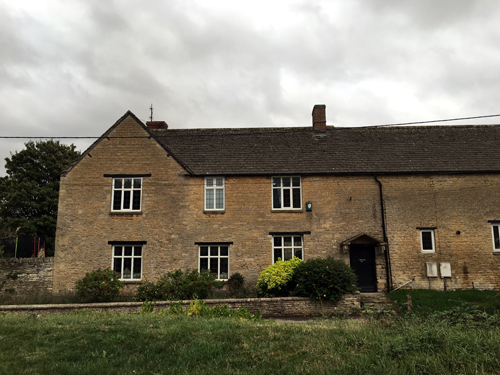
Crown Farm as it is today.

A confrontation in the bean field

About three weeks into the strike, Hambidge recruited two young non-Union men from Ramsden, John Hodgkins and John Millin, to hoe his bean field.

Contemporary newspaper reports suggest that a large group of women from the village, perhaps as many as thirty and accompanied by children, met the young men at the entrance to the field. Their aim was to persuade them not to break the strike.

Exactly what happened next is disputed.

The young men claimed that they had been threatened, molested and prevented from going about their work. For some of the younger women involved, the episode may have seemed far less serious. One later recalled that it had been “just a bit of fun”.

Feeling threatened, the young men returned to the farm and later resumed work under the protection of the village constable.

The farmers respond

Hambidge had been attending Stow Fair with other local farmers when the confrontation occurred. He regarded the women’s behaviour as outrageous and believed action had to be taken to prevent similar incidents elsewhere.

He brought a private prosecution against them.

Arrest, trial and imprisonment

Seventeen women were named as having taken part and summoned before the Chadlington magistrates, sitting at Chipping Norton Police Station.

Two local clergymen, the Rev. Harris and the Rev. Carter, acting as magistrates, found sixteen of the women guilty.

They were sentenced to either seven or ten days’ imprisonment with hard labour in Oxford Gaol.

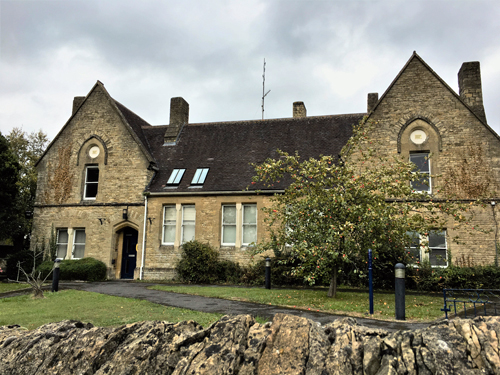
Chipping Norton Police Station before its recent conversion.

National outrage

The sentences provoked a riot in Chipping Norton and an attack on the police station.

News spread quickly into the national press. The case became the subject of letters and argument in The Times, while public pressure grew for the women’s release.

Two babies had accompanied their mothers into Oxford Gaol, drawing particular attention to prison conditions.

The matter was raised in the House of Commons and an enquiry followed. A decision was made to rescind the hard-labour element of the sentences, but the instruction reached Oxford too late to benefit most of the women.

The decision to rescind hard labour did not reach the prison in time to benefit most of the women.

20 JUNE 1873

The women return home

The safe return of the sixteen women, by then being described as “Martyrs”, was celebrated on Ascott village green.

Joseph Arch and other Union leaders attended. Fifteen of the women met them at the station wearing dresses “in the Union blue with headgear to match”.

After a meal at the Swan there were speeches on the village green, and each woman was presented with £5 raised by public subscription.

After that, the women largely disappeared from public history. Their stories survived mainly within their families until renewed interest during the twentieth century.

Who were the Ascott Martyrs?

The women came from across village life. Some were married to skilled craftsmen or railway workers, but all were wives or daughters of agricultural labourers. Many worked in the fields themselves; others supplemented family income by stitching gloves at home.

Their family histories are deeply interconnected. Later research has shown that all the women named were related to one another by birth or marriage.

16
women imprisoned

2
babies taken into Oxford Gaol

c.26
children left needing care

5
women remained in Ascott

Levia Dring

One of the women imprisoned following the Chipping Norton Incident.

Read her story →

Jane Moss & Fanny Honeybone

Two women whose family histories form part of the wider Martyrs story.

Read their stories →

Amelia & Charlotte Moss

Discover the lives and families behind two of the Martyrs’ names.

Read their stories →

Ann Moss

Explore Ann Moss’s place within the intertwined families of nineteenth-century Ascott.

Read her story →

Ann Susan Moss

One of the women whose story survives through family and historical research.

Read her story →

Caroline Moss

Learn more about Caroline Moss and the family networks surrounding the Martyrs.

Read her story →

Martha Moss

Follow Martha Moss’s story and her connections within the village community.

Read her story →

More Martyrs’ biographies

Explore the Mary Moss, Pratley and Smith family stories and the remaining women.

Explore all biographies →

Four other names

Why do four additional women appear in the wider history and commemoration?

Discover their connection →

Their lives after 1873

The consequences of imprisonment extended far beyond the women themselves.

It is estimated that around twenty-six children were left needing care when their mothers were imprisoned without warning. The Union helped feed them.

Large families were common, and repeated childbearing placed great strain on women’s health. Half of the sixteen convicted women were dead within eight years of the Incident.

Elizabeth Pratley and her baby Eli died within months of leaving prison after the family emigrated to Canada. Others later settled in the United States and New Zealand.

Five of the women remained in Ascott for the rest of their lives and helped keep the story alive within the Wychwoods.

What happened next?

The presence of correspondents from the Daily News and The Times brought wider attention to the conditions endured by some of the poorest families in Ascott.

Press coverage also highlighted the treatment of women with babies in prison and contributed to calls for reform. Within two years, the law under which the women had been imprisoned was revised.

Their actions attracted considerable support for the agricultural labourers’ movement, although Joseph Arch and other Union leaders did not approve of the women’s tactics.

Any gains were short-lived. Agricultural depression followed and wages fell again. Many rural families subsequently emigrated to Australia, New Zealand and Canada in search of better opportunities.

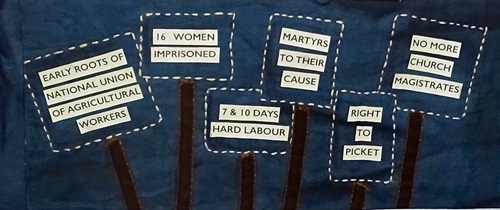
Detail from the Ascott Martyrs Commemorative Textile © Sue Richards.

Remembering the Martyrs

A century after the Chipping Norton Incident, the story was given a permanent place in the landscape of Ascott-under-Wychwood.

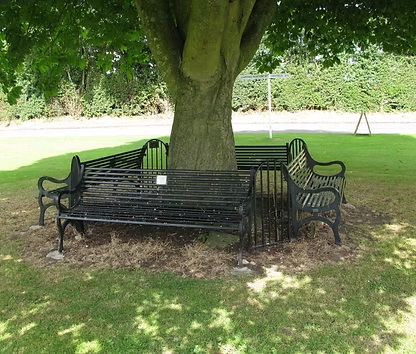
The benches surrounding the Martyrs’ Tree.

The chestnut tree on Ascott village green.

In 1973 a chestnut tree was planted on the village green to mark the hundredth anniversary of the Incident.

The surrounding seats carried the names not only of the sixteen women sent to prison, but also of women remembered by their families as having taken part.

The original benches were later replaced.

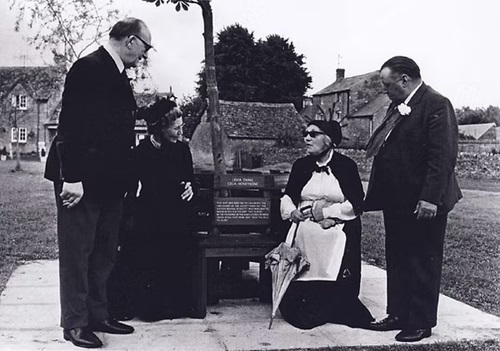
Doris Warner, local historian, with husband Ivor planting the Martyrs’ Tree in 1973. The tree was unveiled by Reg Bottini, General Secretary of the National Union of Agricultural and Allied Workers, with Florentia Tait, Parish Council Chair.

The commemorative textile

The Martyrs are also remembered through the hand-stitched commemorative textile created in 2017–18.

Its imagery tells the story of the women, the strike, imprisonment, emigration and their place in local memory.

Detail from the Ascott Martyrs Commemorative Textile © Sue Richards.

Research and further reading

The story of the Ascott Martyrs has attracted historical, genealogical and literary interest for more than a century.

The wider context

The Revolt of the Field — Arthur Clayden, 1874

Rural Discontent in Nineteenth Century Britain — J. P. D. Dunbabin, 1974

Sharpen the Sickle — Reg Groves, 1949

Over the Hills to Glory — J. R. Hodgkins, 1978

Poor Labouring Men — Alun Howkins, 1985

From Ploughtail to Parliament — Joseph Arch, 1898

Joseph Arch (1826–1919) — Pamela Horn, 1971

The Martyrs

The Ascott Women — S. G. Baker, 1961

Defiant Women — Wendy Pearse, WLHS Journal No. 23, 2008

The Ascott Martyrs — Beverley McCombs, 2016

May 1873 Ascott Martyrs — commemorative textile booklet, 2018

Oxfordshire’s Tolpuddle? — Mark Curthoys, 2021

The Ascott Martyrs — edited by Keith Laybourn, 2023

Research archives

The Society holds extensive electronic and hard-copy material relating to the Chipping Norton Incident and the Ascott Martyrs.

Family-tree research undertaken for the 150th anniversary can also be consulted by appointment.

Original surviving documents are held by Oxfordshire History Centre under reference CPZ 16.

Fiction inspired by the story

Riding to Jerusalem — Elspeth Sandys, 1996. A novel inspired by the events surrounding the Chipping Norton Incident.

Over the Hills to Glory — Doris Warner, 1953. A play written by an Ascott resident.

Researching a family connection?

The Wychwoods Local History Society holds extensive research material relating to the Ascott Martyrs and their families.

If you are researching a family connection, studying the Chipping Norton Incident or would like to consult material in the Society archive, we would be pleased to hear from you.

© Copyright - The Wychwoods Local History Society